

Heriz Rugs
Known affectionately as the "Iron Rug of Iran," the Heriz rug is famous worldwide for its unmatched durability, bold geometric designs, and striking color palettes. Woven in the villages surrounding the Mount Sabalan region of northwestern Iran, these rugs have been a staple in both grand estates and cozy, modern farmhouses for over a century.
Unlike the finely detailed, highly curved city rugs of Isfahan or Kashan, Heriz rugs embrace a more rustic, village aesthetic. They take classic Persian motifs and translate them into dramatic, straight-lined geometric patterns that command attention in any room.
History and Origins
The weaving tradition in Heriz and its surrounding villages (such as Karaja, Ahar, and Bakshaish) is steeped in rural artisanship. Historically, these rugs were woven by villagers without the use of detailed paper blueprints (cartoons). Instead, weavers relied on memory, passing down geometric patterns from generation to generation.
In the late 19th and early 20th centuries, Heriz rugs became incredibly popular in Europe and the United States, particularly among wealthy merchants and industrialists who loved how perfectly the bold scale and warm colors complimented heavily timbered libraries and expansive living rooms.
Characteristics and Weaving Techniques
Heriz rugs are built to last lifetimes, owing to their unique materials and sturdy construction.
1. The "Iron" Wool
The secret to a Heriz rug's legendary toughness lies in the water. Sheep grazing on the slopes of Mount Sabalan drink water rich in copper traces. This copper acts as a natural mordant, fortifying the wool fibers to make them incredibly resilient and highly receptive to dyes. The resulting wool is thick, springy, and almost crush-proof.
2. Thick Cotton Foundation
Unlike the delicate silk foundations of Qum or Isfahan, Heriz rugs are built on heavily spun cotton warp and weft strings. Paired with a large, chunky Symmetrical (Turkish) knot, the final product is a weighty, substantial rug that sits firmly on the floor and resists shifting.
3. Vibrant, Earthy Colors
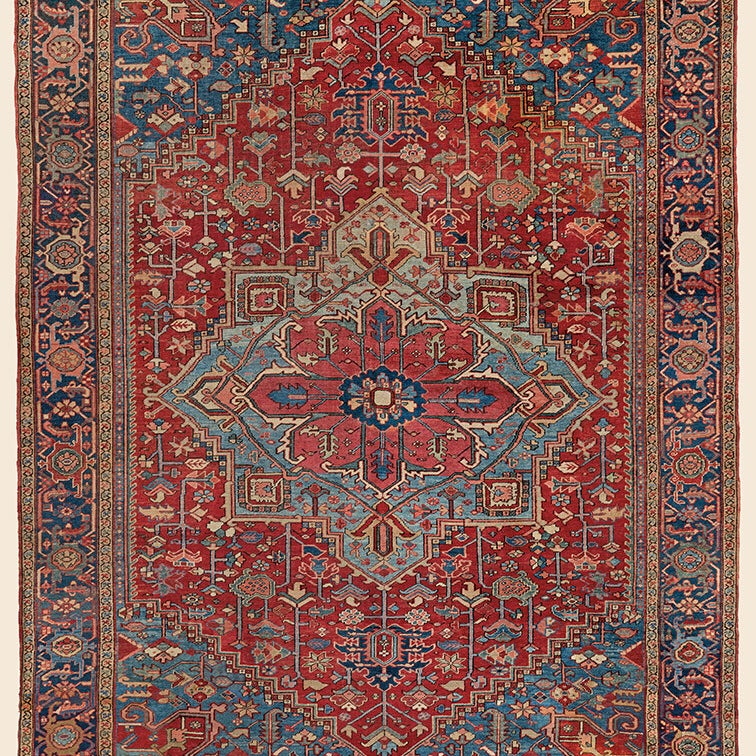
Antique and high-quality Heriz rugs are renowned for their spectacular natural dyes. You will predominantly find deep rust reds, brick terracotta, vibrant indigo blues, and stunning accents of ivory, gold, and light blue. Over time, these colors mellow into the highly sought-after "antique wash" look.
Iconic Designs and Motifs
The designs are universally bold, large-scale, and angular.
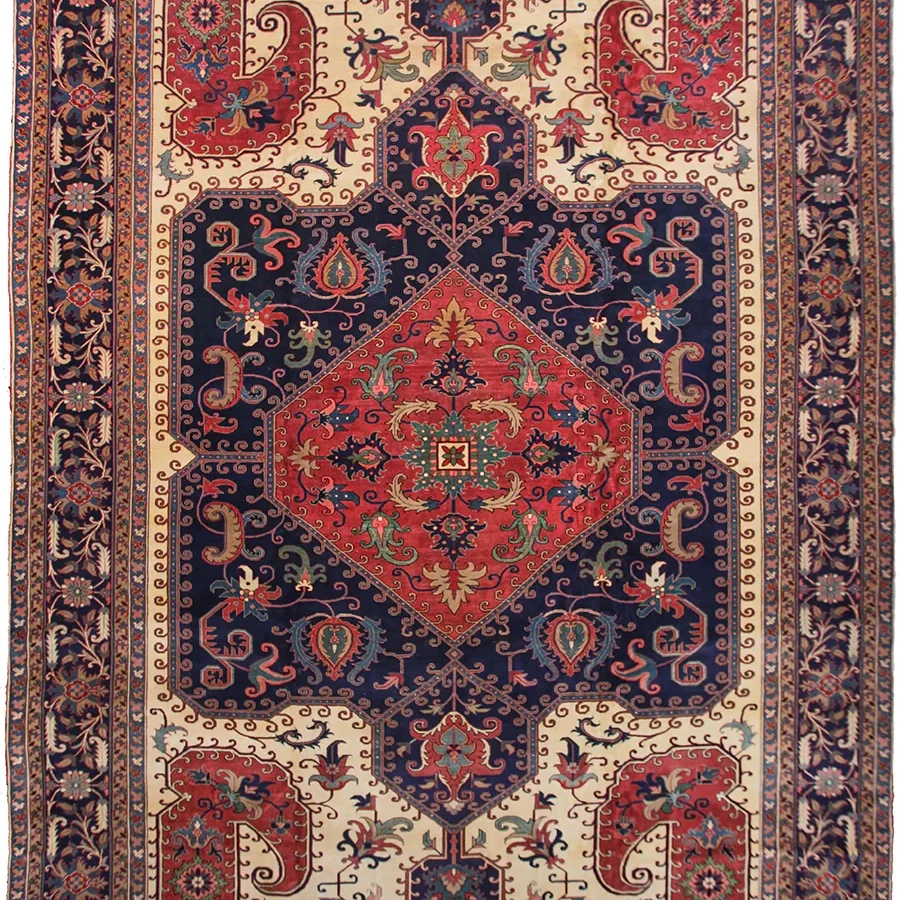
- The Oversized Medallion: The hallmark of a Heriz is a massive, eight-sided (octagonal) or star-shaped central medallion with stepped edges, often featuring contrasting colors that make it pop from the field.
- Geometric Spandrels: The four corners of the rug usually feature jagged, stylized oak leaves, weeping willows, or geometric floral vines that perfectly frame the centerpiece.
- Stylized Florals: While the motifs are technically floral, the weavers' lack of curved lines turns vines and petals into striking, sharp geometric shapes.
Care and Maintenance
Heriz rugs are arguably the most forgiving handmade rugs on the market, making them perfect for high-traffic areas and homes with children or pets.
- Regular Vacuuming: Because the pile is thick and dense, regular vacuuming is recommended to keep dirt from settling into the foundation.
- High Traffic Ready: Feel free to place a Heriz in your entryway, family room, or under a heavy dining table—the resilient wool will spring back.
- Rotate Yearly: Despite their toughness, natural dyes can fade if exposed to uneven, direct sunlight. Rotate the rug to ensure balanced wear.
Looking to explore more styles? Read our comprehensive guide to Types and Designs of Handmade Rugs or check our Rug Size Guide to find the perfect fit.