

Isfahan Rugs
Considered by many experts to be the absolute pinnacle of Persian rug weaving, an Isfahan rug (sometimes spelled Esfahan) is a masterpiece of precision, symmetry, and luxurious materials. They are easily identified by their incredibly thin, perfectly drawn lines, flawless balance, and brilliant use of silk.
Unlike rugged tribal rugs woven from memory, Isfahan carpets are the product of master designers (Ustad) and highly skilled weavers working in tandem to produce art that belongs in palaces and museums.
History and Origins
The city of Isfahan was once the capital of Persia during the Safavid Dynasty. The visionary Shah Abbas the Great was a tremendous patron of the arts, and he transformed Isfahan into one of the most beautiful cities in the world, filled with stunning mosques boasting intricate, glazed tilework.
This grand architecture directly influenced the rug weavers of the city. The breathtaking ceilings of the Shah Mosque and the Sheikh Lotfollah Mosque were translated onto the weavers' looms. To this day, Isfahan rugs carry the legacy of this royal architecture, exhibiting a level of sophistication and classical beauty that is virtually unmatched.
Characteristics and Weaving Techniques
Isfahan rugs are luxury items, and their construction reflects the highest standards of the rug-making world.
1. Silk Foundations
While standard rugs use cotton for their foundation (the warp and weft strings), premium Isfahan rugs almost exclusively use pure silk foundations. Because silk threads are incredibly thin yet stronger than steel of the same gauge, weavers can pack an astonishing number of knots into every square inch (often exceeding 600 to 800 KPSI).
2. Kurk Wool and Silk Highlights
The pile is woven using the highest grade Kurk wool—soft, lustrous wool sheared from the neck and belly of sheep. Master weavers then use pure silk to outline the intricate floral motifs and medallions, creating a gorgeous shimmering effect when viewed from different angles.
3. The "Kheft" System
Similar to the Raj system in Tabriz, Isfahan uses the Kheft system as a mark of quality. A Kheft refers to the number of warp threads in a specific measurement along the fringe. A higher Kheft number indicates a tighter weave, thinner lines, and a more valuable rug. Masterpieces from famous Isfahan workshops (like Seirafian) are highly sought-after investment pieces.
Iconic Designs and Motifs
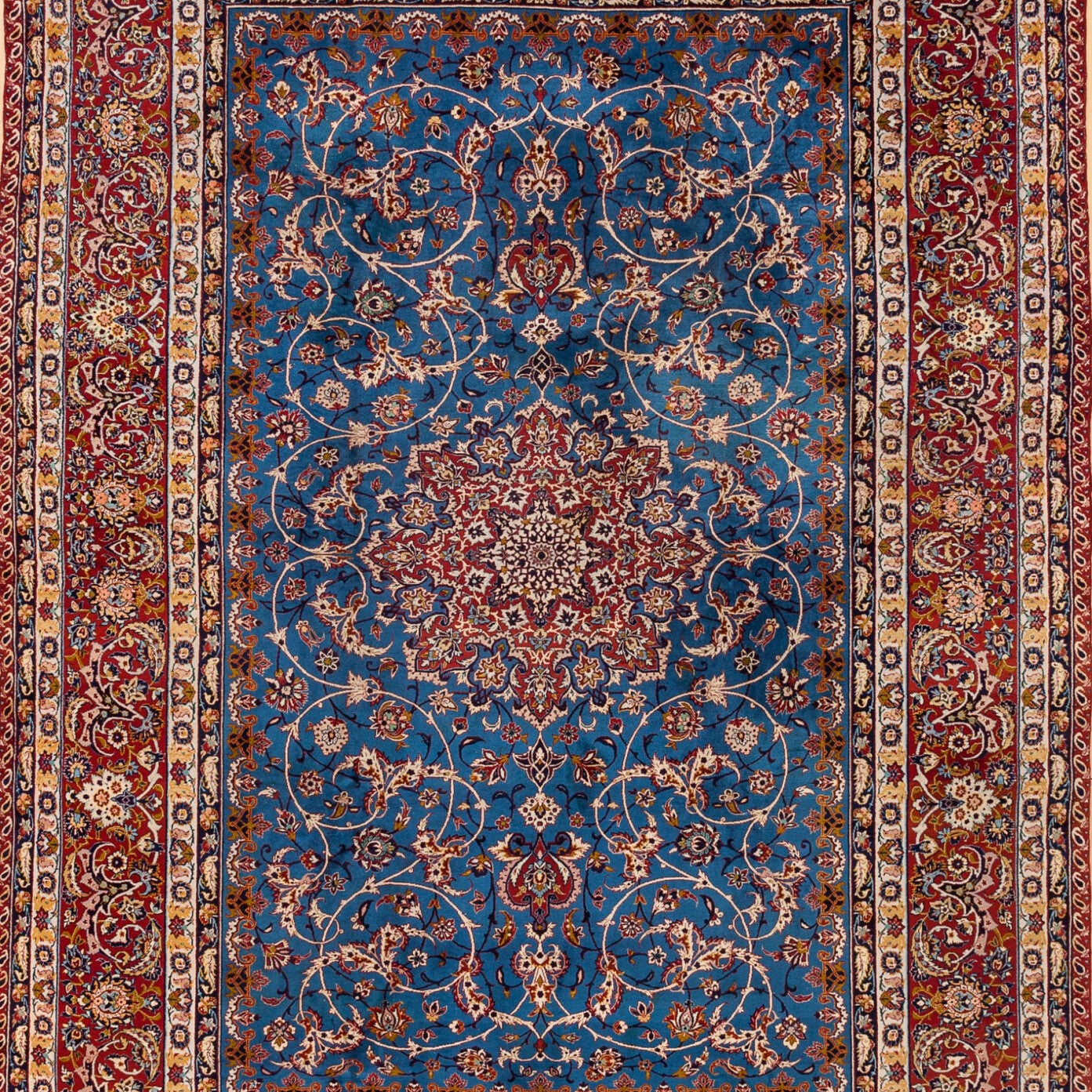
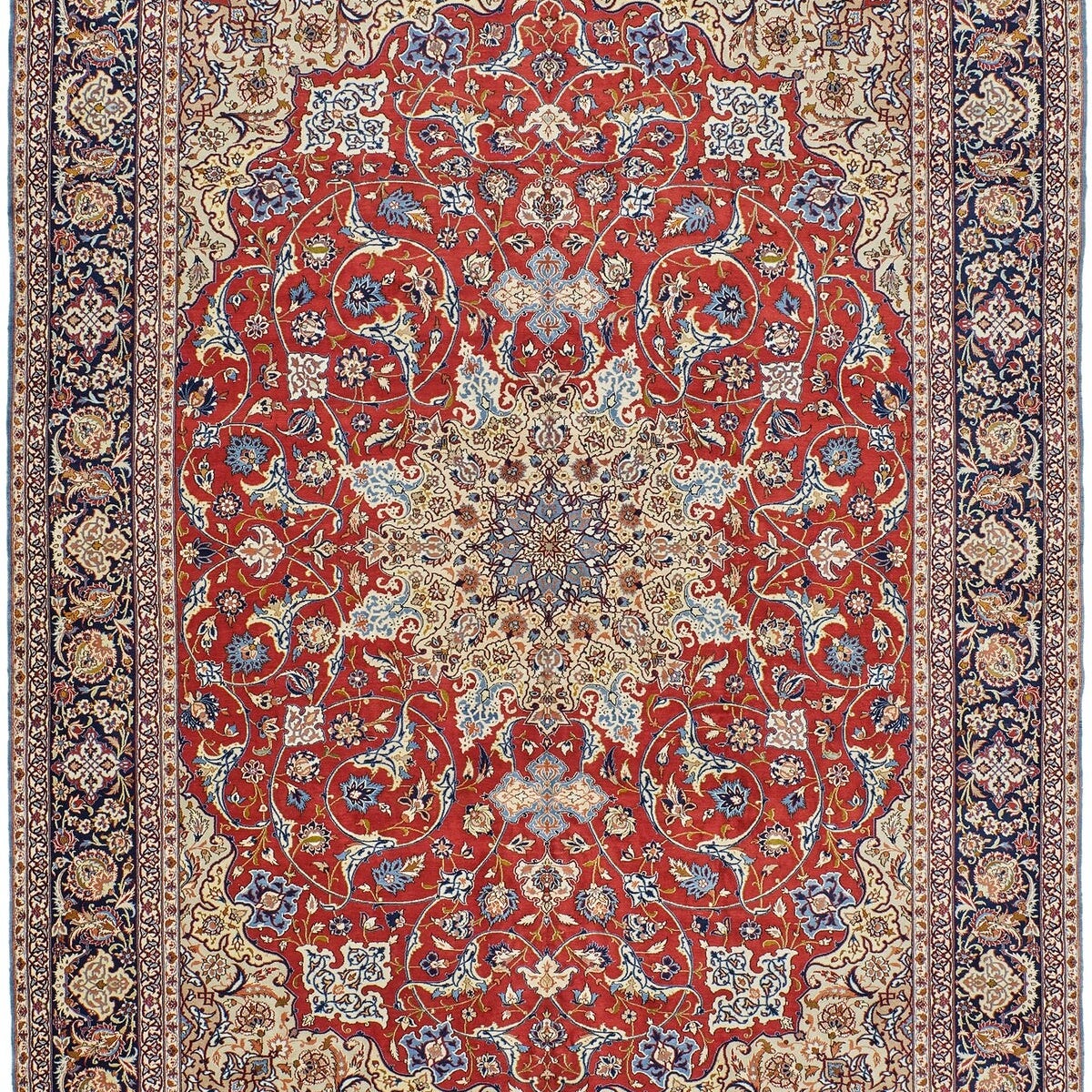
The designs of Isfahan rugs are celebrated for their absolute, mathematically perfect symmetry.
- Architectural Medallions: The central medallions are heavily inspired by the domed ceilings of Isfahan's historic mosques. They are perfectly balanced and deeply complex.
- Eslimi (Arabesque) Vines: The background field is usually decorated with "Eslimi" patterns—sweeping, continuous, intertwining vines and stems that connect delicate palmettes and lotus flowers.
- Elegant Colors: While Kashans are known for deep reds, Isfahan rugs tend to feature a softer, more ethereal palette. You will frequently see fields of ivory, pale blue, rose, and beige, contrasted against vibrant indigo or soft greens.
Care and Maintenance
An Isfahan rug is a fine work of art. Because of the silk foundation and delicate pile, they require mindful care:
- Placement Matters: While durable, museum-quality Isfahans with high silk content are best placed in formal, lower-traffic areas (like a formal living room or bedroom) rather than a busy entryway.
- Suction-Only Vacuuming: Never use a beater bar or rotary brush on an Isfahan rug. Use a suction-only attachment to gently remove dust.
- Watch the Fringes: Because the foundation is often silk, the fringes are delicate. Avoid vacuuming directly over the fringes to prevent them from tangling or breaking.
- Expert Care Only: Never attempt to spot-clean an Isfahan rug with harsh chemicals. Always entrust spills and routine washing to a certified antique rug expert.
Looking to explore more styles? Read our comprehensive guide to Types and Designs of Handmade Rugs or check our Rug Size Guide to find the perfect fit.