

Qum Rugs
If you are looking for the absolute height of silk weaving, you are looking for a Qum rug (also spelled Qom or Ghom). Renowned worldwide as the ultimate symbol of luxury, Qum carpets are frequently woven entirely from 100% natural silk, resulting in pieces so exquisitely detailed and luminous that they are often hung on walls as fine art rather than placed on floors.
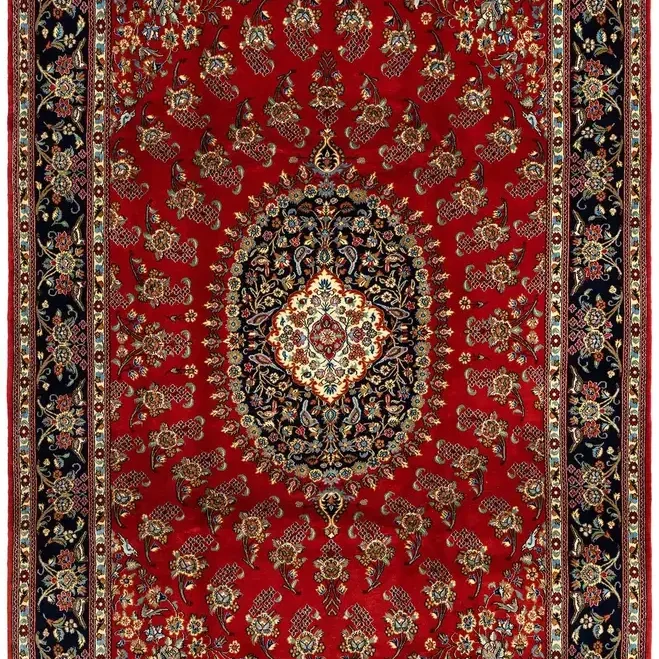
Unlike ancient weaving centers like Tabriz or Kashan, the rug industry in Qum is relatively young. Unbound by strict ancient traditions, Qum weavers are considered some of the most innovative in Iran, freely adopting and elevating the best designs from across the country.
History and Origins
The city of Qum, located south of Tehran, is a holy city in Iran, famous for its shrines and religious scholarship. Surprisingly, commercial rug weaving did not begin here until the 1930s, when merchants from Kashan set up looms in the city.
Because they started late, the weavers of Qum didn't have a signature historical motif to adhere to. Instead, they took the most celebrated patterns from neighboring cities—the medallions of Kashan, the garden panels of Bakhtiari, the fine florals of Isfahan—and wove them with unprecedented knot density using the finest silk available. Today, a pure silk Qum signed by a master weaver (like Jamshidi or Rajabian) is considered a premier investment piece.
Characteristics and Weaving Techniques
Qum rugs are characterized by their breathtaking materials and microscopic precision.
1. The Magic of Pure Silk
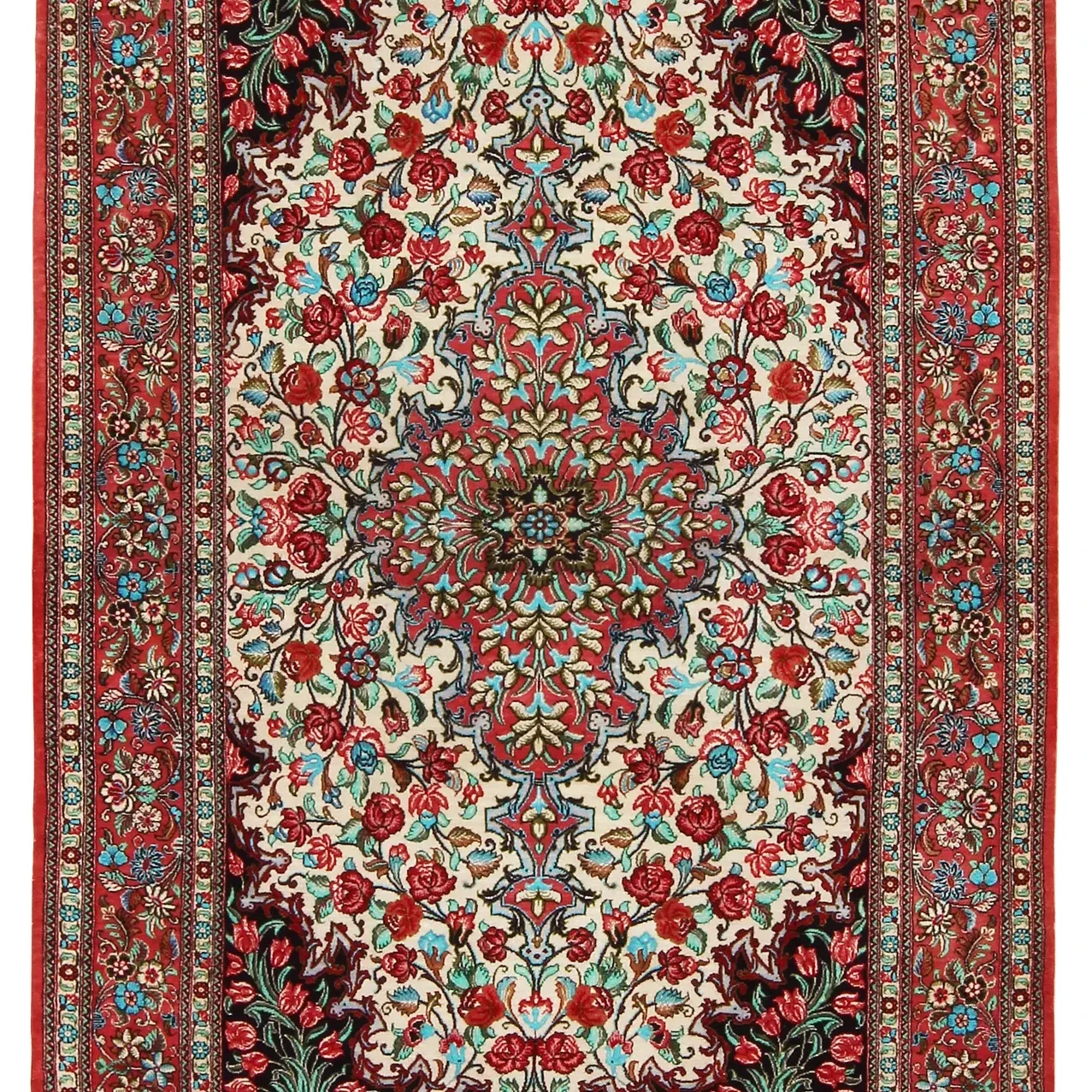
While some Qum rugs are woven with fine wool on a cotton foundation, the city is most famous for its Silk-on-Silk carpets. In these rugs, both the hidden foundation (warp and weft) and the pile are made of 100% pure silk. This gives the rug an incredible, fluid drape—you can literally fold a fine Qum rug like a silk handkerchief.
2. Insane Knot Density
Because silk threads are microscopic compared to wool, Qum weavers can pack an unbelievable amount of detail into a square inch. It is not uncommon for a high-end silk Qum to feature between 600 and 1,000 Knots Per Square Inch (KPSI). This allows for photorealistic curves and shading.
3. A Dazzling Color Palette
Because silk reflects light beautifully, Qum weavers use brilliant, varied color palettes. You will often see vivid combinations of turquoise, magenta, emerald green, gold, and deep navy blue, giving the rugs an almost jewel-like quality.
Iconic Designs and Motifs
Due to their incredible resolution, Qum rugs feature some of the most complex patterns in the world.
- The Tree of Life: A breathtakingly detailed depiction of a singular, sprawling tree teeming with birds, flowers, and animals, often set under a prayer arch.
- Garden Panel (Baktiari Style): The field is divided into dozens of individual squares or diamonds, each containing a perfectly drawn micro-scene of a garden, willow tree, or rosette.
- Hunting and Pictorial Scenes: Highly realistic depictions of mounted hunters, wild animals, or historical Persian legends.
Care and Maintenance
A pure silk Qum is a delicate masterpiece that requires a different approach to care than a wool rug.
- Treat as Art: Silk is durable in tension but can wear down under heavy foot traffic. Silk Qums are best used as wall hangings or placed in very low-traffic, barefoot-only areas (like beside a bed).
- Never Use a Beater Bar: Vacuuming a silk rug with a rotary brush can severely damage the fibers. Use only a gentle suction attachment or, better yet, take the rug outside and gently shake it.
- Keep Out of Direct Sun: Prolonged exposure to direct UV rays can damage silk fibers and fade vibrant dyes.
- Strictly Professional Cleaning: Silk reacts poorly to water and household cleaners. Spills must be blotted immediately, and cleaning should *only* be done by professionals experienced specifically with silk Persian rugs.
Looking to explore more styles? Read our comprehensive guide to Types and Designs of Handmade Rugs or check our Rug Size Guide to find the perfect fit.