

Tabriz Rugs
Tabriz rugs are among the most famous and highly regarded of all Persian carpets. Woven in the historic city of Tabriz in northwestern Iran, these rugs are celebrated for their exceptional quality, diverse range of designs, and incredibly precise knotting.
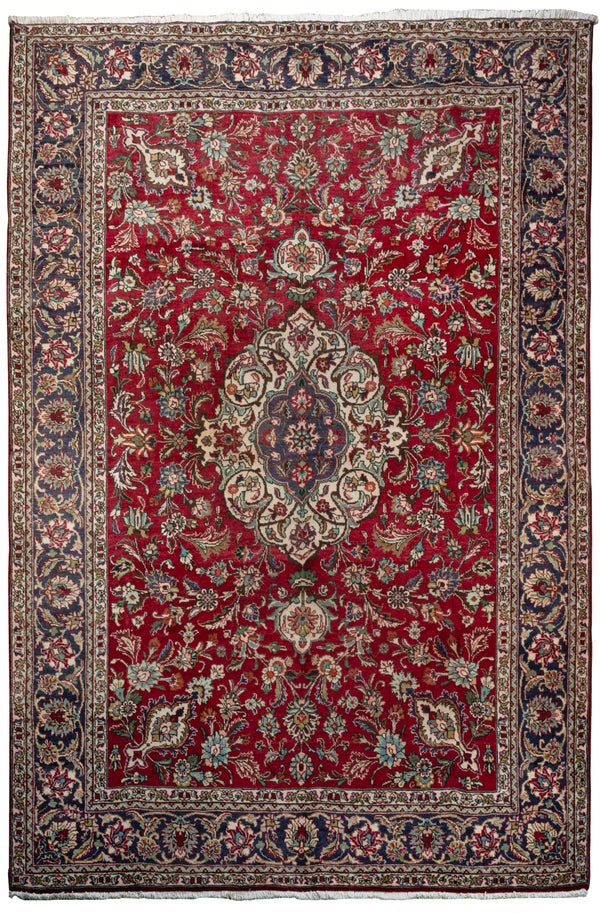
Whether featuring a traditional medallion, a complex repeating floral pattern, or a stunning pictorial scene, a handmade Tabriz rug represents centuries of Iranian artistry and craftsmanship. Because of their tight weave, they are highly sought after by collectors and interior designers alike.

History and Origins
Tabriz is one of the oldest rug-weaving centers in the world, with a rich history that dates back to the Safavid Empire (1501–1736). Acting as a major hub on the ancient Silk Road, Tabriz was deeply influenced by a confluence of various cultures, which is beautifully reflected in the incredible diversity of its rug designs.
During the 19th century, master weavers in Tabriz played a crucial role in reviving the traditional Persian rug-making industry for the European market. Today, it remains a bustling center of rug commerce and creation, producing everything from highly durable home rugs to fine, investment-grade masterpieces.
Characteristics and Weaving Techniques
What distinguishes a Tabriz rug from other renowned Persian styles like Heriz or Kashan? It all comes down to the superior materials, the specific knotting technique, and a unique regional grading system.
1. The Symmetrical Knot
Unlike many central and southern Persian rugs that use the asymmetrical (Persian) knot, Tabriz weavers primarily use the symmetrical (Turkish or Ghiordes) knot. This dual-wrap technique creates an incredibly durable, tight, and highly uniform pile that stands up remarkably well to foot traffic.
2. Premium Materials
The foundation—the hidden warp and weft strings beneath the pile—is typically made of highly spun, strong cotton. The pile itself is generally woven from fine wool, often Kurk wool, which is the softest wool sheared specifically from the belly of a sheep. Master weavers frequently incorporate pure silk highlights to make specific floral motifs or central medallions catch the light.
3. Understanding the "Raj" System
If you are buying or appraising a Tabriz rug, understanding the Raj is essential. This is a unique unit of measurement used exclusively for Tabriz carpets to indicate knot density and overall quality.
- 40 Raj: Excellent commercial quality, highly durable, and perfect for everyday use in living rooms or dining areas.
- 50 Raj: Premium quality, featuring much more intricate designs and tighter weaves.
- 60 to 80+ Raj: Exceptional, investment-grade masterpieces. These are usually silk-heavy and boast incredible photorealistic details.
Iconic Designs and Motifs
Because Tabriz weavers historically had access to a vast network of merchants and traveling artists, their design repertoire is virtually limitless. However, a few iconic patterns dominate the contemporary market:
- The Mahi (Fish) Design: Also known as the Herati pattern, this is perhaps the most recognizable Tabriz design. It features a geometric rosette surrounded by two curved leaves that vaguely resemble swimming fish.
- Medallion and Corner: A classic Persian layout featuring a large, ornate central medallion surrounded by a field of intertwining vines, palmettes, and weeping willows.
- Pictorial and Hunting Scenes: Tabriz artisans are masters of realism. These specialized rugs depict epic hunting scenes, ancient historical events, or intricate botanical gardens with striking accuracy.
Care and Maintenance
Thanks to their dense knotting and high-quality Kurk wool, Tabriz rugs are incredibly durable. To ensure your rug lasts for generations, adhere to these maintenance principles:
- Vacuum Safely: Vacuum weekly using suction only. Always turn off the rotating beater bar, which can pull and damage the wool fibers over time.
- Rotate Periodically: Rotate the rug 180 degrees every 6 to 12 months to ensure even wear and balanced sun exposure.
- Invest in a Pad: Always place a dense, high-quality rug pad underneath to prevent slipping and to protect the cotton foundation from grinding against hard floors.
- Professional Wash: Have the rug professionally washed by a handmade rug expert every 3 to 5 years. Avoid steam cleaning or harsh chemical carpet shampoos.
Looking to explore more styles? Read our comprehensive guide to Types and Designs of Handmade Rugs or check our Rug Size Guide to find the perfect fit.