

Kashan Rugs
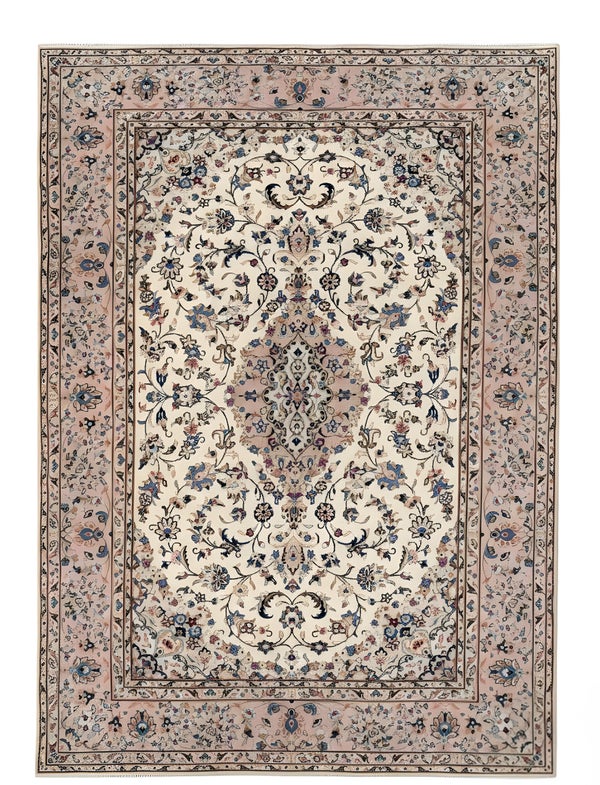
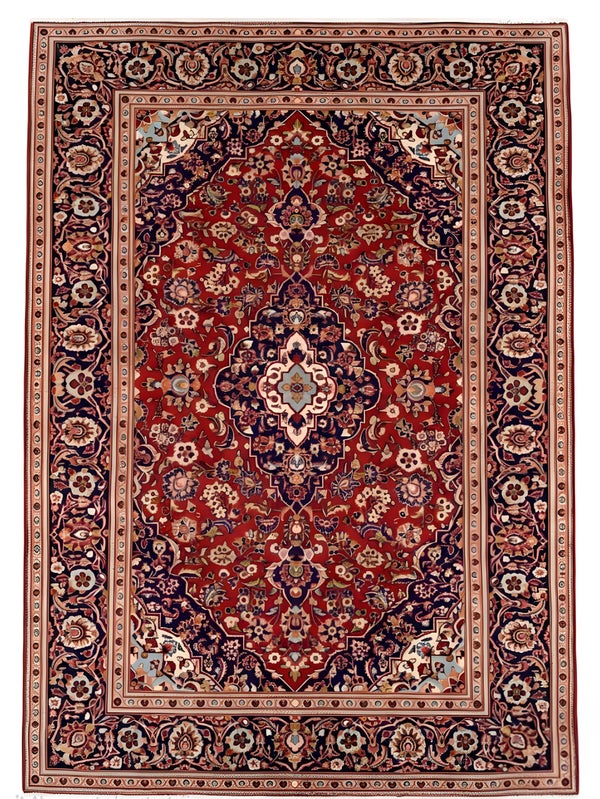
When people picture a classic, traditional Persian rug in their mind, they are almost always picturing a Kashan rug. Characterized by their breathtaking central medallions, rich crimson red fields, and deep navy blue borders, Kashan carpets represent the absolute standard of traditional Persian beauty.
Woven in one of Iran's oldest cities, these rugs are renowned for their incredibly soft wool, tight knotting, and elegantly curved floral patterns that bring warmth, sophistication, and timeless style to any space.
History and Origins
Located in central Iran along the ancient silk trading routes, the city of Kashan has a weaving pedigree that stretches back to the golden age of the Safavid Dynasty (16th and 17th centuries). During this era, Kashan was the site of the royal weaving workshops, producing masterpieces woven from pure silk and silver threads for Persian royalty.
After a period of decline, the Kashan rug industry saw a massive revival in the late 19th century, spearheaded by master weavers who transitioned from making fine textiles to weaving high-quality wool carpets. Today, antique Kashan rugs (particularly "Mohtasham" Kashans) are some of the most coveted collector's items in the world.
Characteristics and Weaving Techniques
A true Kashan rug is instantly recognizable not just by its design, but by its distinct tactile feel and construction.
1. The Asymmetrical Knot
Unlike Tabriz rugs, weavers in Kashan utilize the asymmetrical (Persian or Senneh) knot. This knot allows for incredibly tight, densely packed fibers, enabling the weavers to create the very fluid, curved, and highly detailed floral lines that Kashan rugs are famous for.
2. Extremely Fine Wool
Kashan weavers historically sourced Merino wool from the UK or used premium local Kurk wool. Because the wool is spun so finely, the pile of a Kashan rug is exceptionally soft to the touch and has a beautiful, natural luster that can almost look like silk in the right light. The foundation is almost always made of strong cotton.
3. The Classic Color Palette
While modern Kashans can be found in pastel or muted tones, the traditional, authentic Kashan color palette is strictly defined: a rich, vibrant crimson or brick red field, contrasted beautifully with dark navy blue and ivory in the borders and medallion.
Iconic Designs and Motifs
Kashan rugs rely heavily on curvilinear (curved line) patterns rather than the geometric shapes found in nomadic or village rugs. The most iconic designs include:
- The Diamond/Lobed Medallion: A large, intricately detailed central medallion with matching spandrels (corner pieces) that frame the rug.
- The Shah Abbasi Field: The background of the rug is rarely empty. It is usually filled with intertwining vines, palmettes, and lotus flowers, collectively known as the Shah Abbasi motif.
- Pictorial Trees: Though less common than the medallion, some beautiful Kashan rugs feature the "Tree of Life" motif, depicting a large tree spreading its branches across the entire field.
Care and Maintenance
Because of their fine wool and dense knotting, Kashan rugs are highly durable, but their soft pile requires gentle care:
- Gentle Vacuuming: Vacuum weekly without the use of a harsh beater bar to avoid pulling the fine wool pile.
- Clean Spills Immediately: The tightly packed wool repels liquid briefly, so blot (never rub!) spills immediately with a clean, dry cloth.
- Use a Rug Pad: A premium pad will protect the cotton foundation from friction and keep the rug lying perfectly flat.
- Professional Cleaning: Trust only experienced, hand-wash professionals to clean your Kashan every few years. Chemical cleaners will strip the natural oils and dull the vibrant reds and blues.
Looking to explore more styles? Read our comprehensive guide to Types and Designs of Handmade Rugs or check our Rug Size Guide to find the perfect fit.